Farm Financial Planning: How to Build a 12-Month Farm Budget That Actually Works
Build a farm budget that accounts for commodity price swings, equipment depreciation, labor costs, and crop insurance — a 12-month template and methodology.
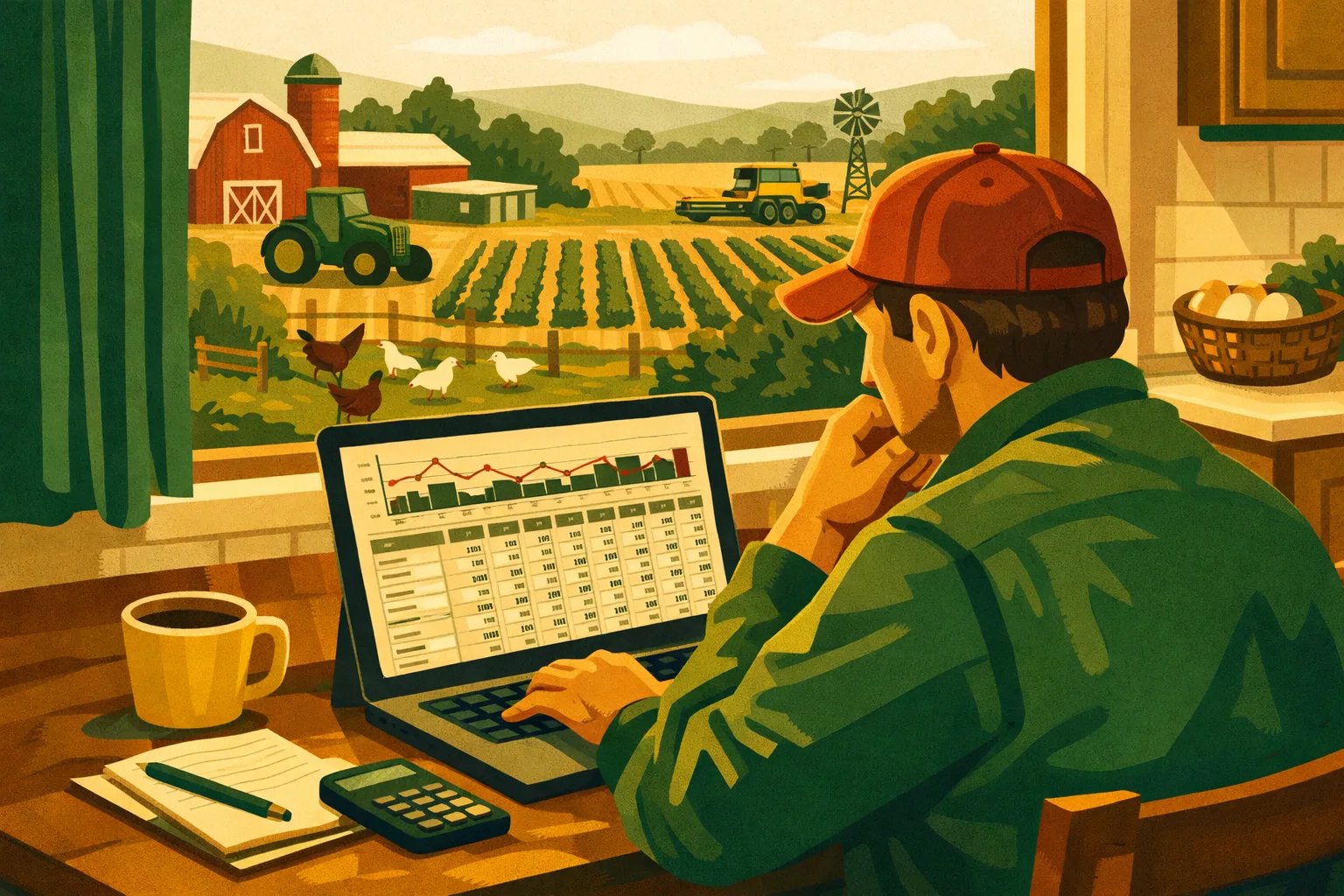
Creating a comprehensive farm budget is a critical step towards maintaining a profitable and sustainable farm operation. Whether you’re managing 50 acres or 5,000, understanding the inflow and outflow of your finances ensures that you can make informed decisions, manage risks, and seize growth opportunities. This guide will walk you through building a practical 12-month farm budget, tailored for commercial farm operators, with a downloadable budget template from FarmsFlo.
Why a 12-Month Budget is Essential
A 12-month budget offers a full view of your financial landscape, allowing you to anticipate seasonal expenses and income variations. This forward-looking approach helps in aligning your financial resources with your operational strategies, reducing financial stress, and enhancing your farm’s resilience against market fluctuations and unexpected events.
Components of a Farm Budget
Revenue
Identifying and projecting your farm’s revenue streams is the first step in budget planning. Your revenue will typically include income from crop sales, livestock, government subsidies, and any additional services you provide, such as agri-tourism or equipment leasing.
Estimating Revenue
- Historical Data Analysis: Use past sales data to estimate future revenue. Look for trends and adjust for any expected changes in conditions or market prices.
- Market Research: Stay informed about market trends and crop/livestock demand forecasts.
- Diversification: Consider adding new revenue streams to stabilize income.
Variable Costs
Variable costs fluctuate with the level of production and include inputs like seeds, fertilizer, fuel, and labor. Accurately estimating these costs is crucial for effective budgeting.
Tracking Variable Costs
- Per-Unit Cost Calculation: Determine the cost per unit of production (e.g., per bushel, per head of cattle).
- Supplier Contracts: Secure contracts with suppliers for stable pricing when possible.
- Efficiency Improvements: Implement practices that reduce waste and optimize input use.
Fixed Costs
Fixed costs remain constant regardless of production levels and typically include expenses like rent, insurance, equipment leases, and salaries. These costs need to be managed carefully to ensure they do not erode profit margins.
Managing Fixed Costs
- Lease vs. Buy Analysis: Evaluate the cost-effectiveness of leasing versus purchasing equipment.
- Insurance Optimization: Regularly review insurance policies for cost-effectiveness.
- Debt Management: Strategically plan debt repayments to maintain liquidity.
Operating Line
An operating line of credit can provide the necessary liquidity to manage cash flow fluctuations throughout the year. Understanding when and how to use this tool is crucial for maintaining financial health.
Effective Use of Operating Credit
- Cash Flow Projections: Use cash flow analysis to determine when borrowing is necessary.
- Interest Costs: Minimize borrowing to reduce interest expenses.
- Repayment Strategy: Develop a clear repayment plan aligned with revenue cycles.
Practical Budgeting Methodology
Step 1: Gather Historical Financial Data
Collect financial data from previous years, focusing on both revenue and expenses. This data serves as the foundation for making realistic projections.
Step 2: Define Financial Goals
Set clear financial objectives for the year. These might include increasing profitability, reducing debt, or investing in new technology.
Step 3: Create a Monthly Revenue Plan
Break down your annual revenue projections into monthly estimates to account for seasonal variations. Use this plan to align your sales and marketing efforts.
Step 4: Estimate Monthly Expenses
Categorize your expenses into fixed and variable, then allocate them monthly based on historical data and expected changes.
Step 5: Integrate the Operating Line
Plan the use of your operating line by identifying months when cash flow might be tight. Ensure the line of credit is sufficient to cover these periods without over-reliance.
Step 6: Review and Adjust
Budgeting is not a one-time task. Regularly review your budget against actual performance and adjust as necessary to stay on track.
Comparison Table: Fixed vs. Variable Costs
| Cost Type | Characteristics | Examples |
|---|---|---|
| Fixed Costs | Do not change with production level | Rent, Insurance, Salaries |
| Variable Costs | Fluctuate with production level | Seeds, Fertilizers, Labor |
Action Checklist: Building Your Farm Budget
- Collect Historical Data: Gather data from the last 3-5 years.
- Set Financial Goals: Define clear and measurable objectives.
- Project Revenue: Estimate monthly revenue based on historical trends and market research.
- Identify Expenses: Break down into fixed and variable, allocate monthly.
- Plan for Cash Flow Fluctuations: Use the operating line strategically.
- Implement Monitoring System: Regularly compare budget vs. actual results.
- Adjust as Needed: Be flexible and ready to make changes.
Download the FarmsFlo Budget Template
To streamline your budgeting process, download the comprehensive farm budget template from FarmsFlo. It includes pre-set categories and formulas to help you effortlessly track and project your farm’s finances over the year. Download Here
How FarmsFlo Helps
FarmsFlo provides the tools and insights you need to make informed financial decisions. Our platform offers advanced budgeting features, real-time financial tracking, and expert support to ensure your farm operates efficiently and profitably. Start your free trial today at FarmsFlo.com and transform your farm budget planning process.
Embark on a journey towards financial stability and growth with FarmsFlo.