Farm Payroll Software: How to Handle H-2A Workers, W-2s, and Farm-Specific Compliance
Farm payroll software guide — managing H-2A visa workers, piece-rate pay, ag FLSA exemptions, and year-end W-2s without a dedicated HR team.
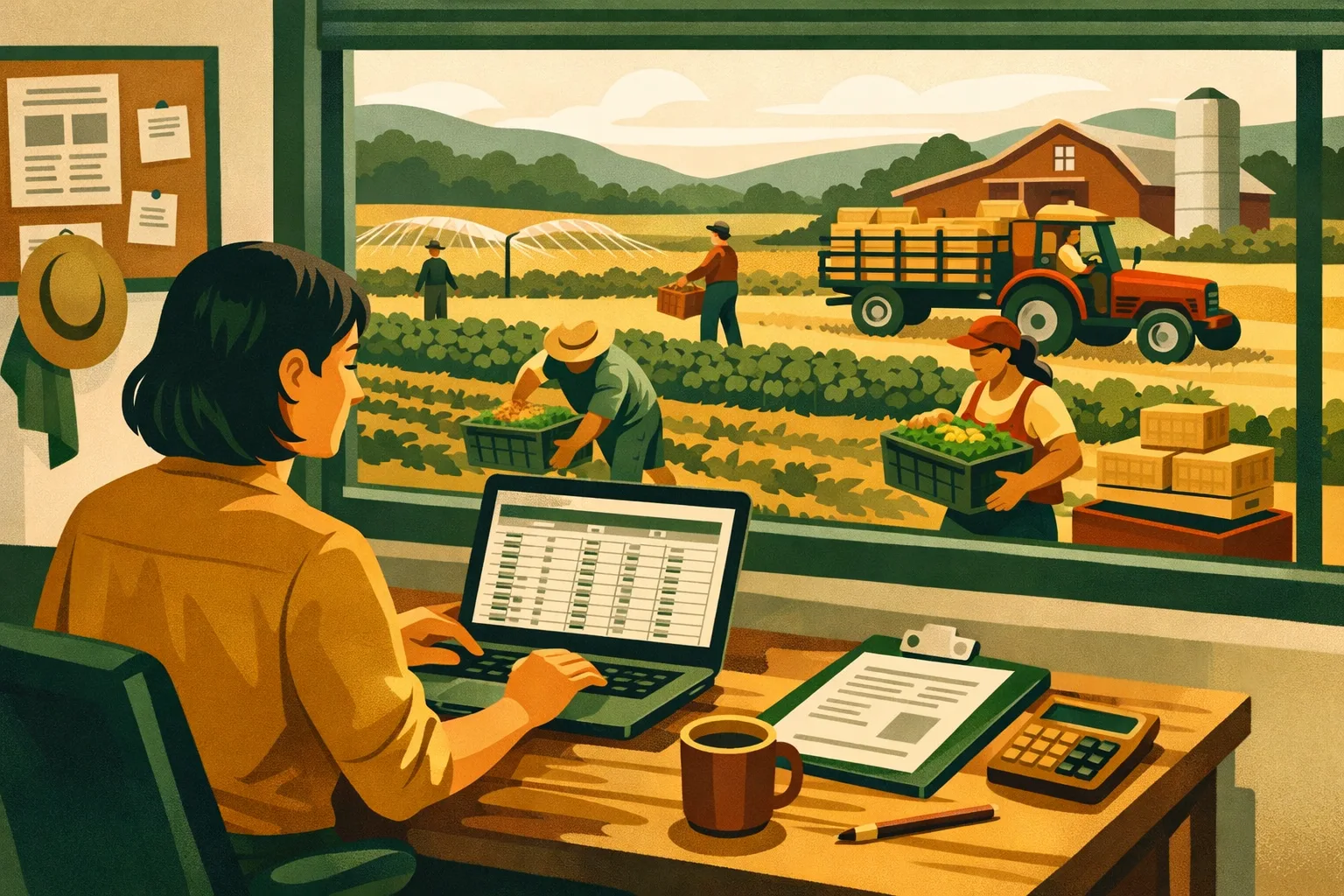
Managing payroll on a farm can feel like juggling flaming torches—especially when you factor in H-2A visa workers, piece-rate compensation, and agricultural exemptions under the Fair Labor Standards Act (FLSA). These complexities demand a specialized approach, one that understands the nuances of agricultural labor. Fortunately, farm payroll software offers a solution tailored to these challenges, easing the burden on farm operators and ensuring compliance with complex labor laws.
Understanding H-2A Workers and Their Impact on Payroll
The H-2A visa program allows U.S. agricultural employers to hire foreign nationals for temporary or seasonal work. While this program provides critical labor resources, it introduces unique payroll challenges.
Key Considerations for H-2A Worker Payroll
- Wage Requirements: H-2A workers must be paid the Adverse Effect Wage Rate (AEWR) or the prevailing wage, whichever is higher. This rate is determined annually and varies by state.
- Work Hours and Overtime: Unlike domestic workers, H-2A workers are not entitled to overtime pay under the FLSA. However, accurate tracking of work hours is crucial for compliance and record-keeping.
- Deductions and Benefits: Employers must cover certain costs such as transportation and housing, which can complicate payroll calculations. Additionally, any deductions from wages must comply with H-2A regulations.
Checklist for Managing H-2A Worker Payroll
- Verify the current AEWR for your state.
- Ensure accurate record-keeping of all hours worked.
- Calculate wages without unauthorized deductions.
- Provide detailed pay stubs that reflect all earnings and deductions.
- Maintain records for at least three years for compliance verification.
W-2s and Farm Payroll: Essential Steps for Compliance
Issuing W-2 forms is a critical part of the payroll process, reflecting each employee’s annual earnings and tax withholdings. For farm operations, this includes both domestic and H-2A workers, adding layers of complexity.
Steps to Streamline W-2 Processing
- Employee Classification: Ensure all workers are correctly classified as employees, not independent contractors, to avoid misfiling W-2s.
- Accurate Earnings Reporting: Report all forms of compensation, including piece-rate and hourly wages, accurately on the W-2.
- Tax Withholdings: Withhold Social Security and Medicare taxes for U.S. workers, while H-2A workers are generally exempt from these withholdings unless they become residents for tax purposes.
Comparison Table: Payroll Differences Between Domestic and H-2A Workers
| Feature | Domestic Workers | H-2A Workers |
|---|---|---|
| Overtime Pay | Required over 40 hours/week | Not required |
| Social Security & Medicare | Withholding required | Generally exempt |
| Transportation & Housing | Not required to provide | Employer must provide |
Navigating FLSA Agricultural Exemptions
The FLSA provides specific exemptions for agricultural workers, impacting the calculation of wages and overtime. Understanding and applying these exemptions correctly is vital for compliance.
FLSA Agricultural Exemptions: What You Need to Know
- Overtime Exemption: Most agricultural workers are exempt from overtime pay under the FLSA, but it’s essential to verify if specific tasks fall under this exemption.
- Minimum Wage: While many farm workers are entitled to the federal minimum wage, certain categories may be exempt, such as immediate family members of the farm owner.
Action List for FLSA Compliance
- Review all job descriptions to determine if they qualify for exemptions.
- Keep detailed records of hours worked for all employees.
- Regularly audit payroll procedures to ensure compliance with FLSA standards.
- Update payroll systems to reflect any changes in federal or state labor laws.
Implementing Farm Payroll Software: Features to Look For
To manage these complexities effectively, farm payroll software must offer specific features that cater to the agricultural sector’s needs.
Essential Features of Effective Farm Payroll Software
- Piece-Rate Compensation Management: Automate calculations for piece-rate work to ensure accuracy and compliance.
- H-2A Visa Support: Ensure the software can handle the specific requirements related to H-2A workers, including AEWR calculations and necessary deductions.
- Compliance Tools: Features that assist in maintaining compliance with both federal and state agricultural labor laws.
- Scalability: As your operation grows, the software should adapt to handle increased payroll demands without losing efficiency.
How FarmsFlo Helps
FarmsFlo’s labor module is designed specifically for farm operations, offering a comprehensive solution to the unique challenges of farm payroll. Our software seamlessly integrates with your existing systems, providing automated compliance checks, detailed reporting, and robust support for H-2A worker management.
Benefits of Using FarmsFlo
- Streamlined Processes: Automate complex calculations and reduce manual errors.
- Compliance Assurance: Stay up-to-date with the latest labor regulations and avoid costly penalties.
- Scalable Solutions: Whether you manage 50 acres or 5000, FarmsFlo scales with your operation.
Ready to simplify your farm’s payroll processes? Try FarmsFlo today and experience the ease of managing farm-specific payroll with confidence.