Livestock Tracking Software: IoT Ear Tags, RFID, and What Actually Works at Scale
Livestock tracking software and hardware guide — RFID, IoT ear tags, GPS, and farm management software integration for cattle, hogs, and poultry operations.
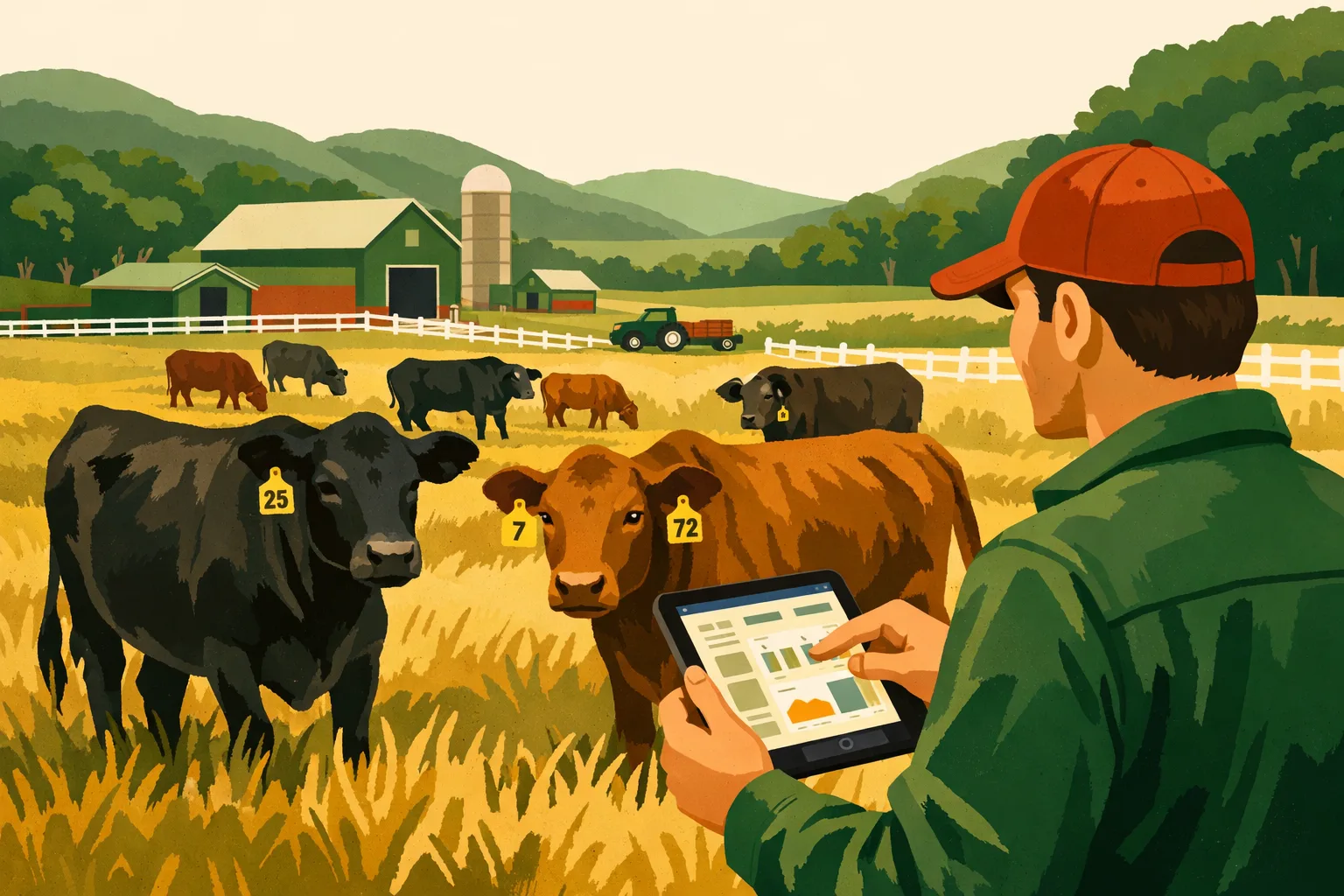
Maximizing Livestock Management with Technology
In the sprawling expanse of modern agriculture, managing livestock efficiently is both a challenge and a necessity. As farm sizes grow, keeping track of animal health, location, and productivity becomes critical. Fortunately, technology provides solutions that not only simplify this task but also enhance operational efficiency and profitability. This guide explores the various livestock tracking technologies—IoT ear tags, RFID, and GPS collars—and evaluates their scalability and cost-effectiveness for large farm operations.
Understanding Livestock Tracking Technologies
IoT Ear Tags: The Smart Solution
IoT (Internet of Things) ear tags have revolutionized the way farmers manage livestock. These small, tech-packed devices attach to an animal’s ear, offering real-time data on location, health metrics, and even behavioral patterns.
Benefits of IoT Ear Tags
- Real-time Monitoring: Continuously transmits data to a central system.
- Health Data: Monitors temperature, activity levels, and more.
- Scalable: Suitable for farms of all sizes, from 50 to 5000+ acres.
RFID: The Traditional Workhorse
RFID (Radio Frequency Identification) technology is one of the earliest forms of livestock tracking. It involves attaching a tag to an animal, which can be scanned to retrieve data.
Advantages of RFID
- Cost-Effective: Cheaper than IoT solutions.
- Reliable: Proven technology with a long track record.
- Ease of Use: Simple integration with existing systems.
GPS Collars: Precision Tracking
GPS collars are another option for farmers looking to monitor their livestock. These devices are particularly useful for large-scale operations where knowing the exact location of each animal is essential.
Key Features of GPS Collars
- Accurate Location Tracking: Pinpoint an animal’s location in real time.
- Durability: Built to withstand harsh environmental conditions.
- Comprehensive Coverage: Ideal for expansive farm areas.
Comparing Livestock Tracking Technologies
Below is a comparison table that outlines the key characteristics of each technology:
| Feature | IoT Ear Tags | RFID Tags | GPS Collars |
|---|---|---|---|
| Real-time Data | Yes | No | Yes |
| Health Monitoring | Yes | Limited | No |
| Cost | Moderate-High | Low | High |
| Scalability | High | High | Moderate |
| Durability | Moderate | High | High |
Choosing the Right System for Your Farm
Cost Considerations
When evaluating livestock tracking technology, cost is a major factor. IoT ear tags, while initially more expensive, offer comprehensive data that can lead to long-term savings through improved herd health and reduced labor costs. RFID tags are ideal for operations needing basic tracking at a lower price point. GPS collars, though costly, are perfect for large farms where precise location tracking is critical.
Integration with Existing Systems
Ensure that whichever system you choose integrates seamlessly with your farm’s current management software. This reduces administrative burdens and maximizes the utility of the data collected.
Assessing Farm Needs
Consider the following questions when choosing a livestock tracking solution:
- What is the primary goal of tracking (health monitoring, location, productivity)?
- How many animals do you need to track?
- What is your budget for initial setup and ongoing maintenance?
Practical Checklist for Implementing Livestock Tracking
- Evaluate Farm Needs: Define specific goals and tracking requirements.
- Research Technologies: Compare IoT, RFID, and GPS solutions.
- Budget Planning: Calculate initial and ongoing costs.
- Integration Assessment: Ensure compatibility with existing systems.
- Vendor Consultation: Discuss options with technology providers.
- Pilot Program: Test the chosen solution on a small scale.
- Full-scale Implementation: Roll out the system across the operation.
- Staff Training: Educate employees on new technology and processes.
- Monitor and Adjust: Continuously review system performance and make necessary adjustments.
How FarmsFlo Helps
FarmsFlo is dedicated to helping farmers streamline their operations with cutting-edge technology solutions. By integrating livestock tracking systems into our comprehensive farm management platform, we provide you with the insights needed to make informed decisions that boost productivity and profit.
Try FarmsFlo today to see how we can transform your livestock management practices. Visit farmsflo.com for a free trial and discover the future of farming.